FOLK LOUNGE / CREATIVESmembership
UNLIMITED MEMBERSHIP
✓ Unlimited classes
✓ Community Buddy
✓ All recordings for 90 days
✓ Live Material Salon events
✓ Member Workspace
✓ 2 guest passes
✓ Level Specific Discord
✓ Billed monthly
✓ In person or virtual
✓ Folk Lounge "Founders"
✓ Cancel any time$95/month
$85/month
Founding Members lock in $85/month as long as you are an active member! After May 1st 2025, membership increases to $95/month. First 20 members only."LIMITED MEMBERSHIP
✓ 4 classes per month
✓ Community Workspace
✓ Community Discord
✓ Billed monthly
✓ In person or virtual
✓ Cancel any time$45/month
Hardship, Student & Senior: Email for a reduced rate of $75/month for those experiencing financial barriers. CLASS PACKS
12 @ $270 ($22.50/class): my people
8 @ $200 ($25/class): into it!
4 @ $110 ($27.50/class): try it!
Use within 3 months
1 @ $35 drop-in: bring a friend!
✓ Flexible schedule
✓ Community Workspace
✓ New hobby buy as you go
✓ In person only
✓ Make new friends
✓ Use within 9 monthsSTART FOR FREE
Community workspace to get inspired, explore and get started with basics.
Feel more beauty, harmony, nature & kindness.faq’s
-
Membership is billed monthly through Stripe. Your first charge occurs when you subscribe and renews on the same date each month. You'll receive an email receipt after every charge.
-
Yes. Cancel anytime through your Stripe account. Your membership stays active until the end of your current billing period — so if you cancel mid-month, you keep full access until your next billing date. No partial refunds.
-
Pausing isn't currently available. If you need a break, cancel and resubscribe when you're ready. Note that founding member pricing is only available to active members — if you cancel and return after May 1st the $95/month rate applies.
-
Yes. Upgrade or downgrade anytime through Stripe. Changes take effect at the start of your next billing period.
events creatives
original series | 2h | $39.19
Pasadena Heritage, Pasadena CA
level 1 - Inspiration & Exploration
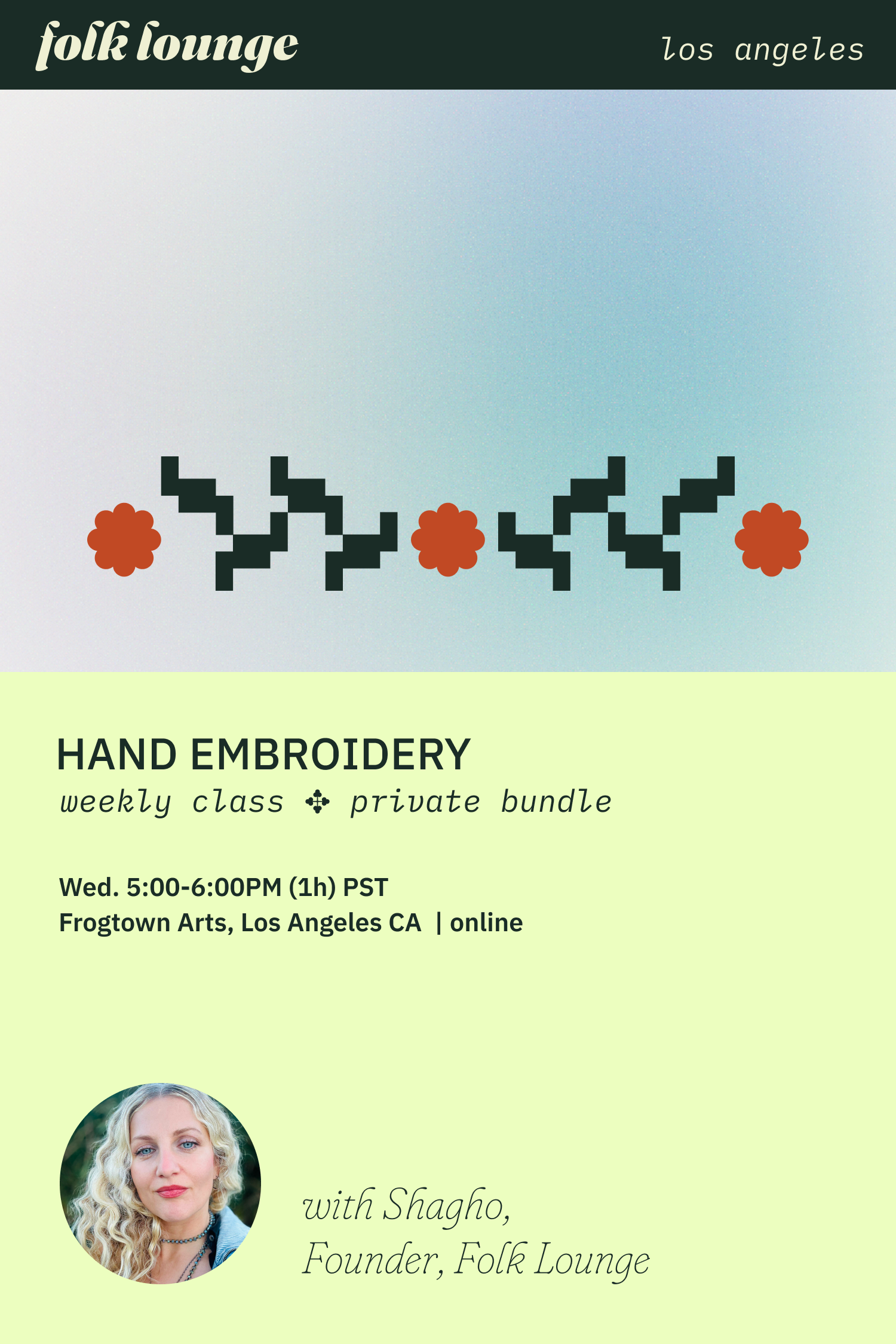
weekly program | 1h | every Wednesday
Frogtown Arts, Los Angeles CA
level 2 - Projects & Experience
weekly program | 1h | every Wednesday
Frogtown Arts, Los Angeles CA
level 3 - Portfolio & Authenticity
meet-up series | 2h | every 4 Saturdays
LA State Historic Park, Los Angeles CA
level 1 - Inspiration & Exploration
concept workshop | 2h
Ventura Beach Marriott, Ventura CA
level 1 - Inspiration & Exploration
concept workshop | 2h
Ventura Beach Marriott, Ventura CA
level 1 - Inspiration & Exploration
meet-up series | 2h | every 4 Saturdays
Brand Library & Art Center, Los Angeles CA
level 1 - Inspiration & Exploration
original series | 2h
Pasadena Heritage, Pasadena CA
level 1 - Inspiration & Exploration
news creatives
When knowledge transmission breaks—whether through buried rivers, displaced communities, or interrupted traditions—the knowledge continues through different channels and methods. Recent research reveals how Indigenous river epistemologies, hydrofeminist frameworks, and community-based restoration offer alternatives to systems that treat water, culture, and memory as problems to be managed rather than relationships to be maintained.
I've been thinking about interconnectedness a lot lately—how the patterns we see in folk art, the wisdom embedded in traditional practices, and the way natural systems work all point to something deeper about how change actually happens. When I learned about systems thinking for research praxis at a recent California Institute of Integral Studies event, something clicked into place.
When astronomer Dr. Hilding Neilson looks up at the Big Dipper, he sees two stories simultaneously. The Western version: seven bright stars in Ursa Major, roughly 79 to 124 light-years away. The Mi'kmaq version: Muin the bear being hunted by seven brave birds through an eternal cosmic drama that teaches about courage, seasons, and the interconnectedness of all life.
Carl Sagan's "Pale Blue Dot" represents the latest chapter in humanity's oldest story: our attempt to understand our place in the cosmos. While the Voyager photograph gave us an unprecedented view of our world, the psychological and spiritual impact it created echoes themes that have resonated across cultures for millennia.
Every creative choice now involves actively mediating between seemingly opposed forces: planetary boundaries and human creativity, global networks and bioregional rootedness, AI efficiency and seven generations thinking. We are living through the end of late capitalism and the emergence of what we might call the Time of Regenerative Negotiation—the first period in human history where cultural producers must consciously work within planetary limits while building life-sustaining alternatives.
Philosopher Ernst Bloch's "The Principle of Hope" argues that human dreaming contains what he calls "anticipatory consciousness"—active projections of possibility that can shape reality. For those of us at Folk Lounge exploring ornament, culture, and nature, this insight reframes decorative traditions as repositories of collective longing.
Every traditional medicine chart maps the same beautiful truth: invisible currents shape visible reality. Life force flows through pathways that modern anatomy can't locate, yet gentle interventions along these phantom routes measurably transform our entire being. What if our creative practices operate through similar hidden networks—energetic webs that connect individual making with collective flourishing in ways our culture has forgotten how to see?
Picture Owen Jones in 1851, standing before the Great Exhibition's glittering palace of iron and glass, watching the world's first global showcase of industrial might. While others marveled at steam engines and mechanical looms, Jones was studying something else entirely—the patterns carved into ivory combs from India, the rhythmic geometries of Persian carpets, the flowing curves of Chinese porcelain. These objects carried crystallized intelligence, ways of thinking made visible through centuries of human hands working with materials.
In villages across the globe, away from watchful eyes and social media, sacred rituals of self-adornment persist. A woman carefully wraps her gele in Nigeria; another applies henna patterns in Morocco; elsewhere, silver jewelry is positioned with reverence. These aren't acts of vanity but profound ceremonies—moments where adorning the body becomes an intimate celebration of one's very existence as worthy of beauty and care.
In a world of quick online tutorials and rapidly changing art supplies, there exists a timeless resource that has guided generations of artists through the material foundations of their craft. Ralph Mayer's "Artist's Handbook of Materials and Techniques," first published in 1940 and continuously updated since, represents not just a technical manual but a bridge connecting contemporary makers to centuries of accumulated wisdom about the physical substance of art.
Beneath the iconic palm-lined boulevards of Los Angeles lies a richer, more resilient botanical story—one of aromatic sages, sculptural manzanitas, and vibrant wildflowers that have evolved in perfect harmony with our Mediterranean climate. These native plants, adapted through millennia to thrive in our distinct cycle of wet winters and dry summers, offer more than just beauty—they conserve precious water, support local wildlife, and reconnect us to the authentic character of our region.
In the shadows of Pasadena's historic Craftsman homes and nestled among its native landscapes lies a forgotten language of pattern and place. The clay relief tiles of Ernest Batchelder—once adorning fireplaces, fountains, and facades throughout the city—represent not just architectural ornament but a philosophy of creation that connects human craft with natural inspiration. By exploring these traditional techniques in connection with the very parks that inspired Batchelder's designs, we can reimagine how craft traditions might once again become living practices.
Remember the wonder of looking through a kaleidoscope as a child? The world transformed into fragments of jewel-toned light, shifting and recombining with each small movement. This childlike perception—where colors dance and vibrate with life—is our natural birthright. Embroidery offers a path back to this chromatic awareness, inviting us to see the world not through monochromatic lenses but through the full vibrant spectrum of color that has defined human creation throughout history.
What if our deepest fulfillment comes not from acquiring more but from experiencing more deeply? What if the richest life emerges from reconnecting with capacities that lie dormant within us? Through simple acts like threading a needle, mixing colors, or shaping clay with our hands, we open pathways to dimensions of experience that have always been our birthright—an embodied, perceptually rich, communally connected, and culturally vibrant way of being.
Remember the wonder of looking through a kaleidoscope as a child? The world transformed into fragments of jewel-toned light, shifting and recombining with each small movement. This childlike perception—where colors dance and vibrate with life—is our natural birthright. Embroidery offers a path back to this chromatic awareness, inviting us to see the world not through monochromatic lenses but through the full vibrant spectrum of color that has defined human creation throughout history.
In the span of five generations, my family's journey stretches from Armenian mountains and Russian shores to French villages and Los Angeles sunsets. This living timeline—from my grandparents born in pre-Soviet times to my American-born children—encompasses world wars, migrations, and the quiet revolutions of daily life across continents. What remains after these journeys are not just stories but objects made by hand—tangible threadlines connecting us across time and place.
Beneath our skin exists a universe as vast and complex as the stars above. The human body—home to trillions of microorganisms, intricate neural networks, and systems in constant flux—functions as an ecosystem within the larger web of life. Yet in our rush to understand the world beyond us, we often forget to listen to the wisdom dwelling within our very cells.
In the heart of Los Angeles, amidst concrete and steel, a quiet revolution unfolds every few Sundays. Small groups gather in urban parks, fingers nimble with colorful threads, creating not just art but community—stitch by stitch. These embroidery socials, where the ancient meets the contemporary, offer profound insights that mirror nature's own wisdom.
In a sunlit corner of the library, a weathered six-volume set sits largely untouched by casual browsers. Stith Thompson's "Motif-Index of Folk-Literature" catalogs thousands of recurring elements from global storytelling traditions—from magical transformations to impossible tasks, trickster animals to supernatural helpers. Yet these academic tomes share a profound connection with the vibrant textiles displayed in museums and handcraft markets worldwide. The same symbolic language that shapes our oldest stories also flows through the embroidery traditions that women have preserved across generations and continents.